
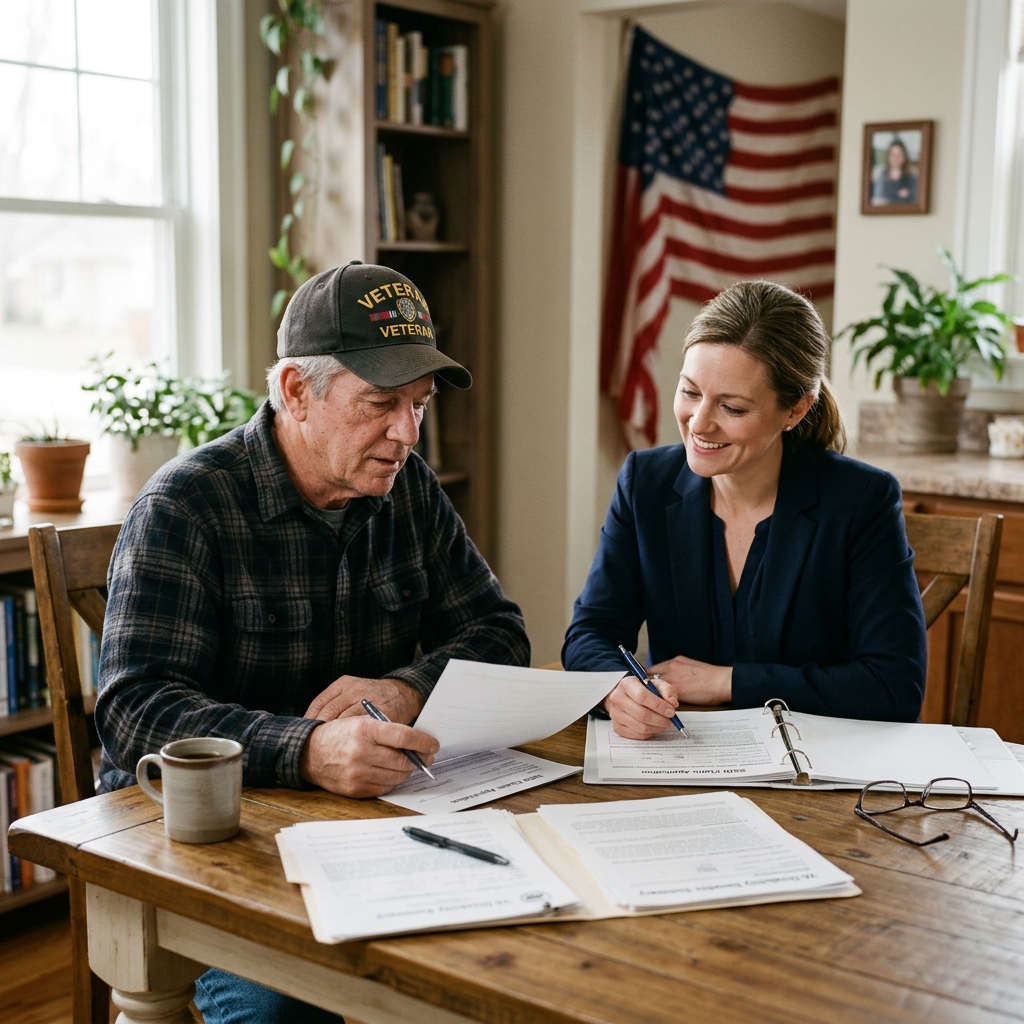
This Veterans Day, we want to answer one of the most common questions we hear from veterans in Evansville and across the country: “If I already get VA disability, can I also get Social Security Disability?”
The short answer is yes, many veterans can. VA disability compensation and Social Security Disability Insurance (SSDI) are two separate programs, and receiving one doesn’t automatically stop you from receiving the other. But they have different rules, and qualifying for one doesn’t guarantee you’ll qualify for the other.
Here’s what veterans should know about SSDI, how it works alongside VA benefits, and how certain veterans can get their Social Security claims processed faster.
Can You Receive Both VA Disability and SSDI?
Yes. According to the Social Security Administration, “Veterans Affairs compensation will not affect your Social Security benefits.”
That means if you qualify for both, you can receive your VA compensation and your SSDI benefits at the same time.
Why a VA Rating Doesn’t Automatically Qualify You for SSDI
The two programs use different rules. The SSA notes that “the criteria for awarding benefits is not the same,” and that even a 100% VA rating doesn’t automatically qualify you for Social Security disability benefits. You still have to meet Social Security’s definition of disability.
According to the SSA’s eligibility page:
- You must be unable to work at a “substantial” level. For 2026, monthly earnings above $1,690 (or $2,830 if you’re blind) generally count as substantial gainful activity.
- Your condition must last at least a year or be expected to result in death. Social Security pays only for total disability, not partial or short-term disability.
- You need enough work credits. Most people need 40 credits, with 20 earned in the 10 years before the disability began. Younger workers may need fewer.
This is one of the biggest differences from the VA system. Social Security doesn’t pay partial benefits based on a percentage rating.
SSDI vs. SSI for Veterans
SSDI is based on your work history and the Social Security taxes you’ve paid. Supplemental Security Income (SSI) is a separate, needs-based program with strict income and asset limits. Learn more in our guide: SSDI vs. SSI: What’s the Difference?
How to Get Your Claim Expedited
Social Security offers faster processing for certain veterans. According to the SSA, it expedites disability claims for:
- “Wounded warriors”
- Veterans with a VA compensation rating of 100% Permanent & Total (P&T)
Expedited processing speeds up how your claim is handled. It doesn’t change the medical rules. You still have to meet Social Security’s definition of disability.
How to request expedited processing if you’re rated 100% P&T
The SSA explains:
- If you apply in person or by phone, tell the Social Security representative that you’re a veteran with a 100% P&T rating.
- If you apply online, enter “Veteran 100% P&T” in the Remarks section of the application.
- Include your VA notification letter that shows your 100% P&T rating.
Conditions We Often See in Veterans’ Claims
Veterans apply for SSDI for many reasons, including physical injuries, chronic illnesses, and mental health conditions. For example, post-traumatic stress disorder can be part of a disability claim. Read our article on SSDI and PTSD to learn how Social Security evaluates it.
What If Your Claim Is Denied?
Many claims are denied at first, but a denial isn’t the end of the road. You generally have 60 days from the date you receive a denial to file an appeal at each level. Learn more in How to Appeal a Denied SSDI Claim, and see How Long Does SSDI Take? for a realistic timeline.
How POAG Disability Law Can Help
Applying for Social Security Disability while managing VA benefits can be confusing. Our team helps clients with SSDI claims, appeals, and hearings. Because SSDI is a federal program, your attorney doesn’t have to be in the same state as you, and POAG Disability Law represents clients nationwide from our office in Evansville, Indiana.
Start with a free disability case review. We’ll listen to your situation, review your work history and where your claim stands, and explain your possible next steps.
Call 1-812-777-0065 or toll-free 888.POAG.LAW, or contact us online.
Frequently Asked Questions
Yes, if you meet Social Security’s requirements. The SSA states that VA compensation will not affect your Social Security benefits.
No. The VA and Social Security use different criteria, so you still have to meet Social Security’s definition of disability.
If you’re rated 100% P&T by the VA, tell Social Security when you apply, or write “Veteran 100% P&T” in the Remarks section online, and include your VA rating letter.
No. Social Security pays only for total disability, not partial or short-term disability.
You generally have 60 days from the date you receive a denial to appeal at each level.
SSDI is a federal program, so your attorney doesn’t have to be in your state. POAG Disability Law represents clients nationwide.
This article is for general information only and is not legal advice. Every claim is different. Contact a disability attorney to discuss your situation.